IN DEVELOPMENTPERSONAL PROJECT2026SOLO PM & DESIGNER

Glow Guard - Personal Cosmetic Intelligence System

Glow Guard is a personalized skincare app that helps users decide whether a cosmetic product is right for their skin. Users can scan or search products to analyze ingredients against their personal sensitivities and skincare history, while tracking products, reactions, and experiences over time.

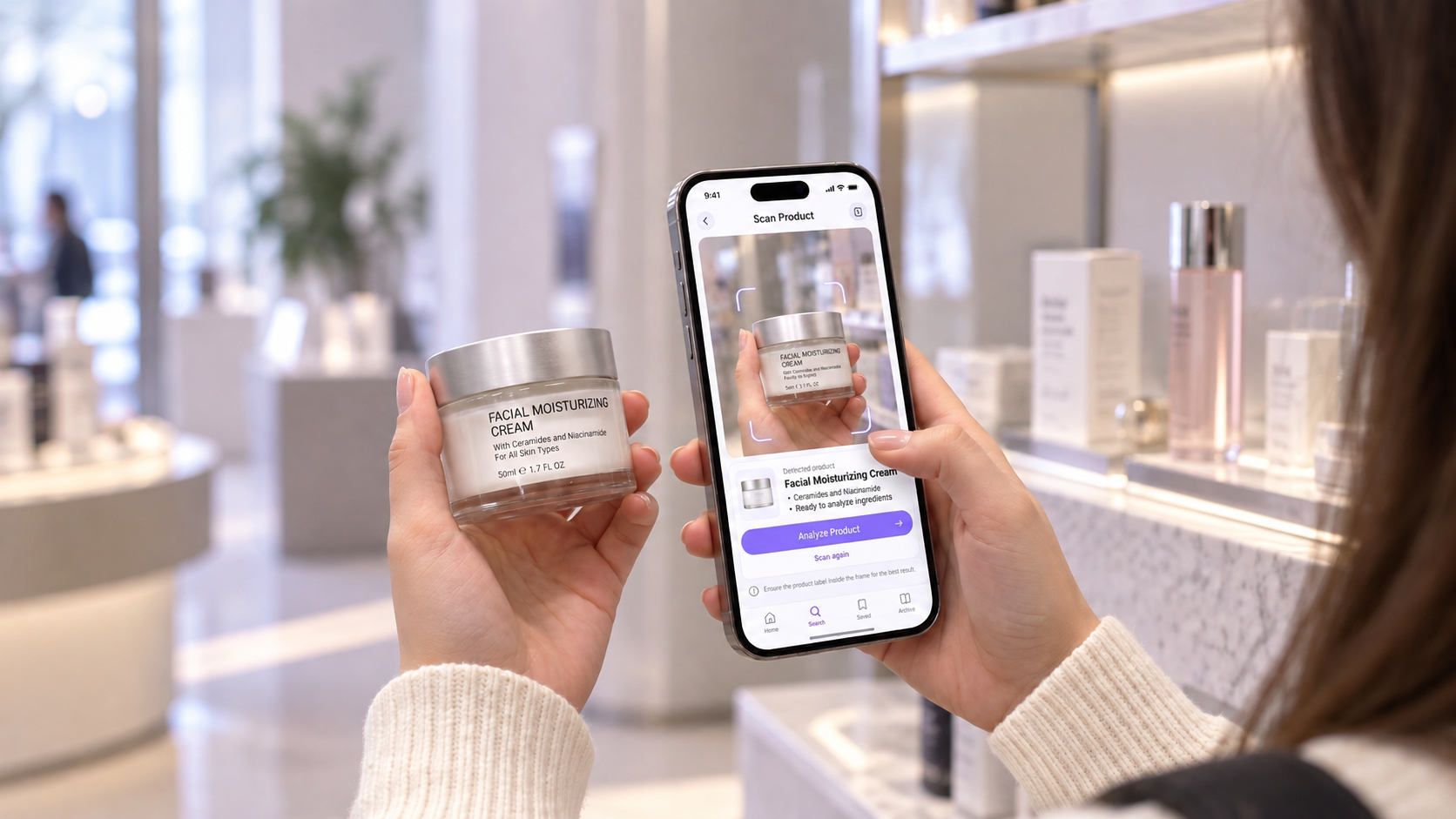
Glow Guard product scanning in a cosmetics store

1. Product Overview

I started with a personal pain point: standing in a store, staring at a shampoo label, and having no idea if the chemicals were safe or if they would trigger my skin sensitivities. I realized this wasn’t just a lack of data, but a lack of relevance. I validated this hypothesis later through market research, confirming that consumers abandon complex ingredient checkers because the data lacks personal context.

Instead of answering only “Is this product clean?” Glow Guard is designed around: “Is this product right for me?”

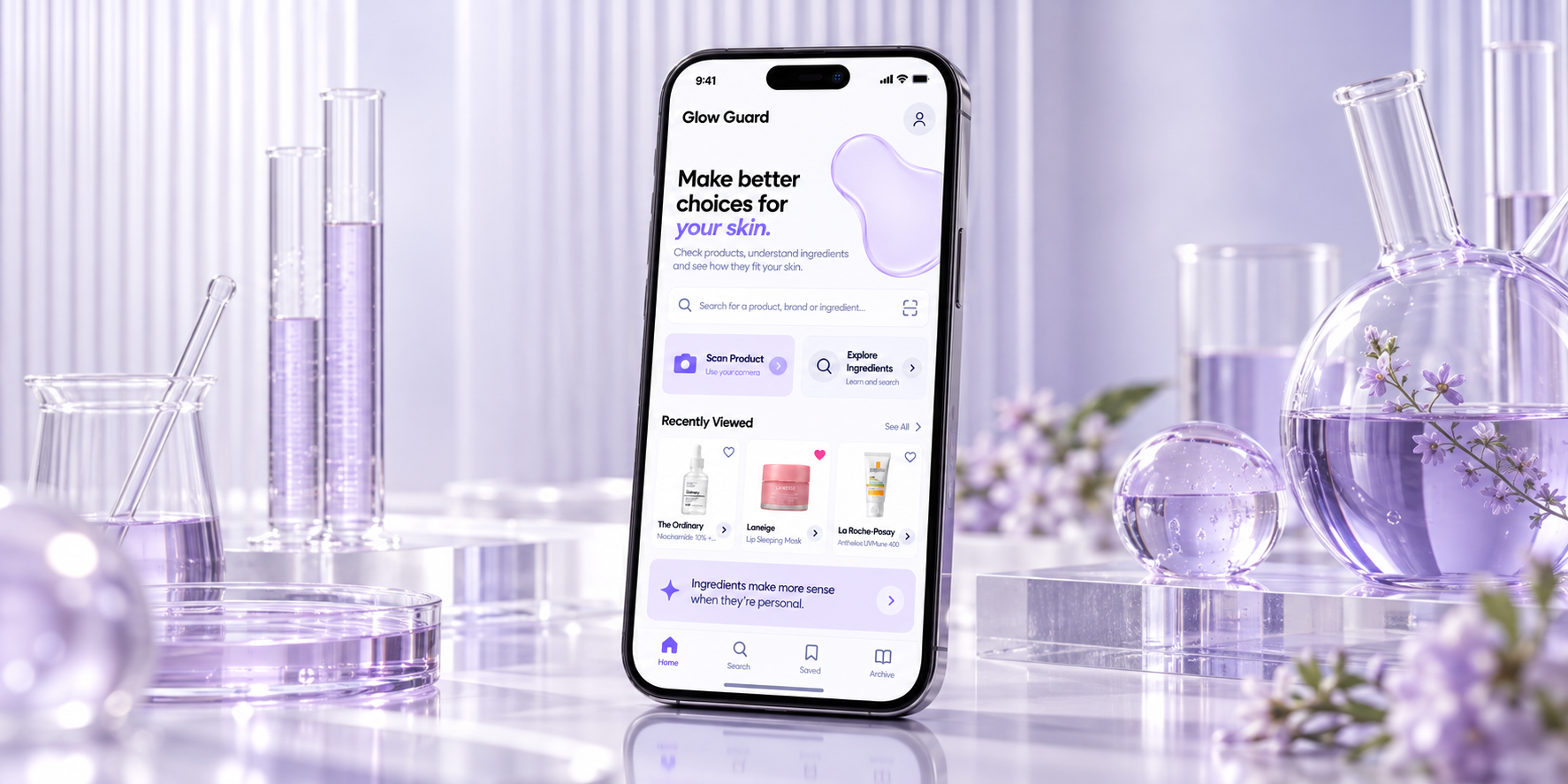
Glow Guard product overview

2. The Problem Space

The product originated from a personal pain point that I later validated as a widespread market gap: consumers cannot decode cosmetic ingredient lists, and existing solutions lack personal relevance.

Information Overload: Cosmetic APIs and ingredient checkers present dense chemical data or binary “clean/toxic” labels.

Lack of Context: A product rated “100% clean” globally can still trigger a severe reaction for a user with specific sensitivities (e.g., rosacea, specific botanical allergies).

Trust Deficit: Many existing platforms rely on sponsored brand placements, compromising their objectivity.

Product Vision: Shift the paradigm from generic database lookup to a personalized skincare record.

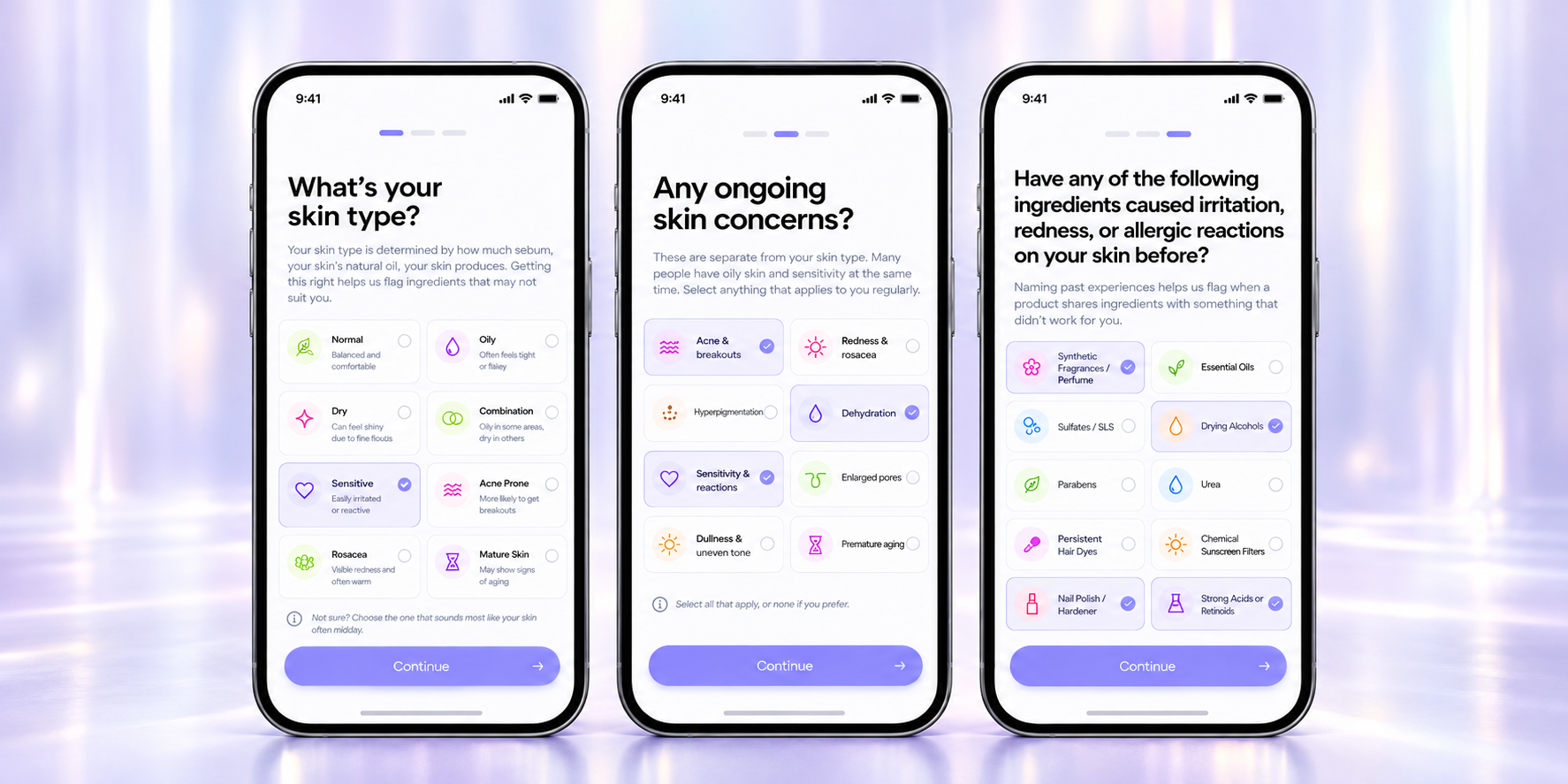
Glow Guard personalized skin profile setup

3. Product Scope & Monetization Strategy

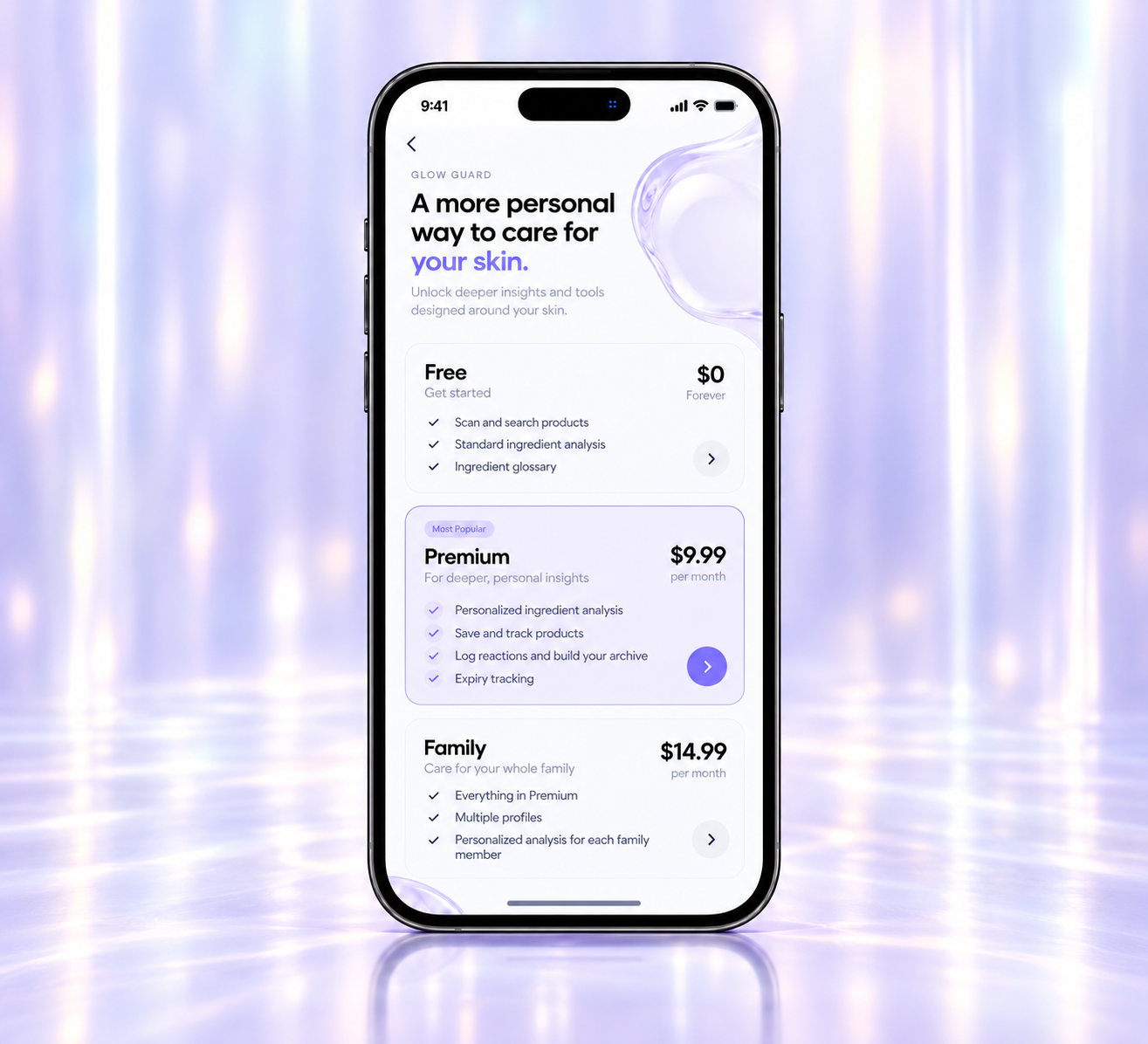
I designed a freemium model that commoditizes basic search to drive top-of-funnel acquisition, while monetizing the personalized AI context layer.

Free Membership (Top-of-Funnel Acquisition & Utility)

Omnichannel Search: Manual entry, Barcode scanning, and OCR (Camera) ingredient scanning.

Standardized Analysis: 1–10 rating scale based on objective metrics (clean, vegan, cruelty-free etc).

Premium Membership (Core Monetization & Retention)

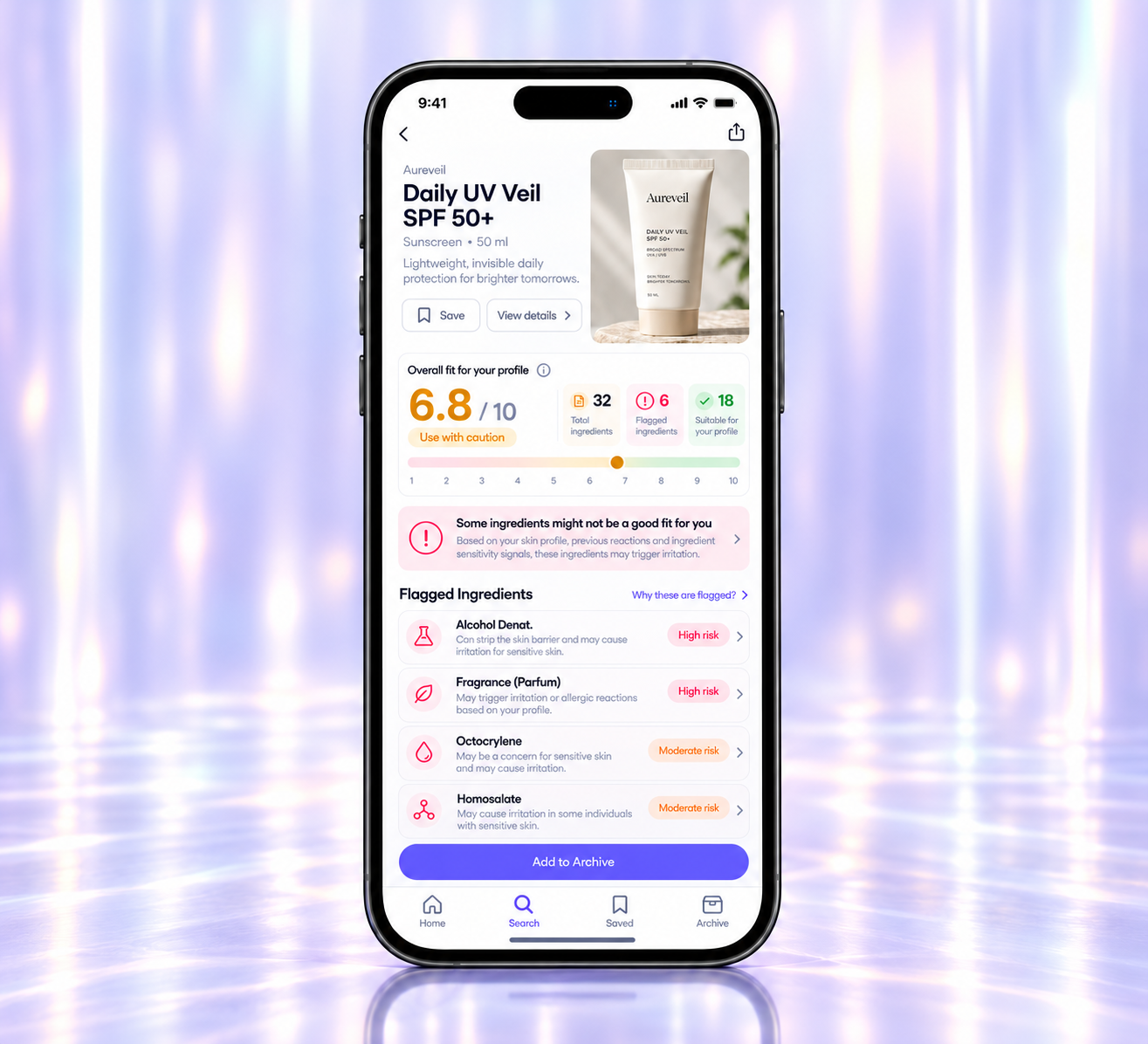
AI Contextual Analysis: Cross-references scanned ingredients with the user’s onboarding profile (skin type, allergies, previous reactions) to flag specific personal risks.

Ingredient Glossary: Breakdown of chemical components.

Skincare Archive: A personal library to save products and track historical usage.

Expiry Tracking (PAO): Tracking the “Period-After-Opening” lifespan of saved products.

Structured Logging: Ability to log structured product reactions (1-5 stars, predefined tags like “Didn’t work for my skin”).

Family Membership (Expansion/TAM Growth)

Family Mode: Create profiles for multiple family members, with dedicated tools for parents to track their children’s allergies and check products against each child’s individual profile.
Glow Guard Free, Premium and Family membership plans

4. Strategic Product Decisions & Trade-offs

Personalization vs. Certainty

Glow Guard’s strategy is to make ingredient information more relevant by combining it with each user’s skin profile, known sensitivities, and product history. The trade-off is that personalization can reveal meaningful patterns without proving causation. The product therefore treats personal matches as signals rather than definitive conclusions, helping users understand what may be relevant to them without presenting correlation as medical certainty.

Simplicity vs. Transparency

The product is designed to make complex ingredient information understandable at a glance through a 1–10 rating, clear flags, and personalized alerts. Simplification, however, can hide important context. Glow Guard uses progressive disclosure: users receive a clear assessment first, then can explore individual ingredients, reasons for flags, evidence types, and sources when they need more detail. The strategy is to make the first decision simple without making the underlying reasoning invisible.

AI Interpretation vs. Deterministic Logic

I prefer not to use AI where deterministic software guarantees accuracy. Product lookups, database matching, and exact known-sensitivity checks are handled far more reliably, and cost-effectively with conventional hardcoded software. I reserved AI exclusively for the judgment layer where it adds unique value: normalizing messy OCR text from user photos, translating complex clinical evidence into understandable explanations, and finding hidden chemical triggers across a user’s product history. AI supports the decision-making process; it does not replace reliable rules and data.

Coverage vs. Data Reliability

A cosmetic scanner becomes more useful as the number of supported products grows, but broader coverage can introduce incomplete or inconsistent ingredient information. Glow Guard prioritizes reliable, traceable information over maximum catalog size, using defined data sources and clearly handling missing information rather than presenting uncertain results as complete. The longer-term strategy is to expand data coverage and partnerships as usage justifies the additional infrastructure.

Safety Signals vs. Unnecessary Alarm

Ingredient concerns do not all represent the same level or type of risk. Treating every flag as dangerous could make the product misleading and reduce trust. Glow Guard separates broader ingredient concerns from personal matches and communicates different levels of relevance through its rating and alert system. The strategy is to surface information users should consider without turning the product into a binary “safe vs. toxic” classifier.

Feature Breadth vs. Core Utility

Glow Guard could expand into expiry tracking, product alternatives, ingredient education, pregnancy-related information, and other adjacent features. The core strategy remains focused on the primary loop: search or scan → analyze → personalize → understand → archive. Additional capabilities become valuable only when they strengthen that experience, allowing the product to grow around its core proposition rather than becoming a general-purpose skincare app.

Glow Guard personalized ingredient analysis and product trade-offs

5. Technical Strategy & Risk Mitigation

The “Cold Start” & Missing Data Fallback: Cosmetic APIs lack 100% global coverage. I designed a cascading fallback mechanism. If a barcode scan returns “Product Not Found,” the app seamlessly prompts the OCR to extract the raw text. The system then queries the API for individual ingredients rather than the whole product, ensuring the user never hits a dead end.

Legal Liability & UX Copy: Labeling a brand’s product as “toxic” invites immediate legal action. I designed the UX language to be cautious and highly personalized. Instead of absolute health claims, the UI flags ingredients with conditional framing (e.g., “This product contains [Ingredient], which you previously flagged as an irritant”). Regulatory warnings and personal sensitivities are visually separated to manage liability.

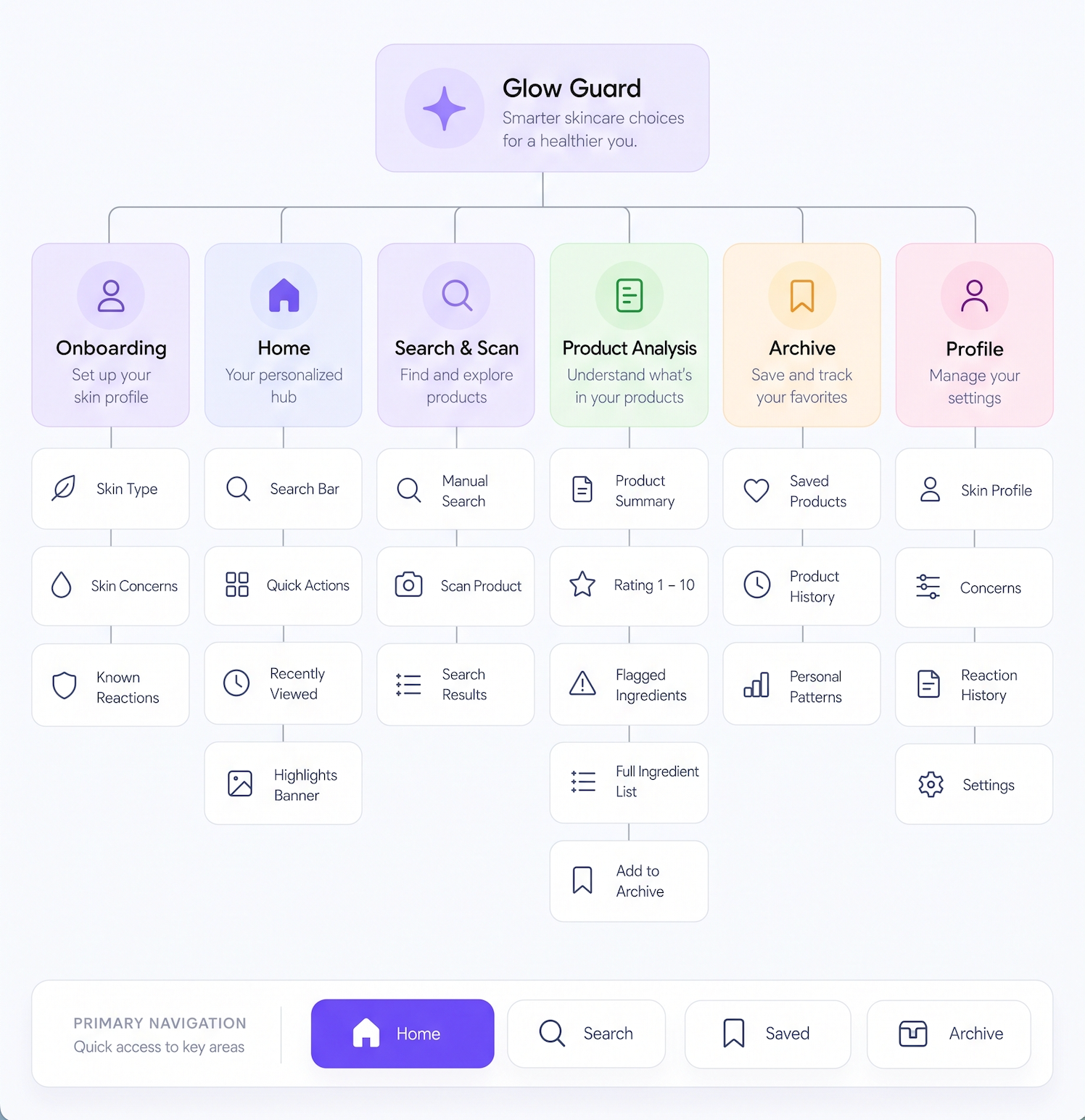
Glow Guard information architecture

6. Success Metrics & KPIs

To validate the product loop, I defined the following instrumentation matrix:

North Star Metric: Archive Engagement Rate:

 The frequency at which users save a scanned product to their personal library and attach a contextual tag. This proves the product is moving from a transactional search tool to a sticky, personalized record.

Activation: Scan-to-Result Conversion:

 The percentage of new users who successfully complete their first product analysis (via any input method) within the first session.

Retention: Weekly Active Users (WAU) interacting with the Personalization Layer:

 Tracking users who return to consult their archive or scan new products.

Monetization: Free-to-Premium Conversion Rate:

 Triggered specifically by the prompt to unlock “Personalized Compatibility Warnings,” validating the willingness to pay for context.

FINAL THOUGHTS

A good product is not defined only by what you build. It is defined by what you deliberately choose not to build.

Glow Guard taught me to treat product decisions as trade-offs rather than feature requests. I had to balance user value with trust, data limitations, risk, monetization and scope while being honest about what was still unknown. The result is not a finished product pretending to have answers it doesn't have. It is a product direction with clear decisions, explicit constraints and a roadmap for what I would validate next.