I turn complex problems into clear product strategies and scalable solutions.

PRODUCT STRATEGY · GROWTH · AI INNOVATION

Explore selected work

SELECTED WORK

01 - 03

MY APPROACH

Discovery

Understand the problem before jumping to the solution. I look at user needs, business context, existing workflows and the signals that reveal where the real friction is.

Product Definition

I translate strategy into MVP scope, PRDs, user flows, prototypes and experiments that help teams learn before investing too heavily.

Growth & Monetization

I look for the points where user value and business value meet: activation, retention, positioning, conversion and monetization opportunities.

AI & Product Innovation

I explore where AI can meaningfully improve a workflow, decision or product experience, then define the product logic, risks and evaluation criteria around it.

MY AI PRODUCT JUDGEMENT

I treat AI as a product decision, not a default feature.

The question is not where AI can be added, but where intelligence, automation or adaptation creates enough value to justify the complexity.

01FIND THE LEVERAGE

Start with the problem, not the model.

I first look for the part of the user or business problem where intelligence can meaningfully change the outcome. Sometimes that means automation. Sometimes prediction, personalization or decision support. Sometimes the right answer is not to use AI at all.

The goal is not to make the product more intelligent. It is to make the outcome better.

02DEFINE AI'S ROLE

Decide what AI should own and what it should not.

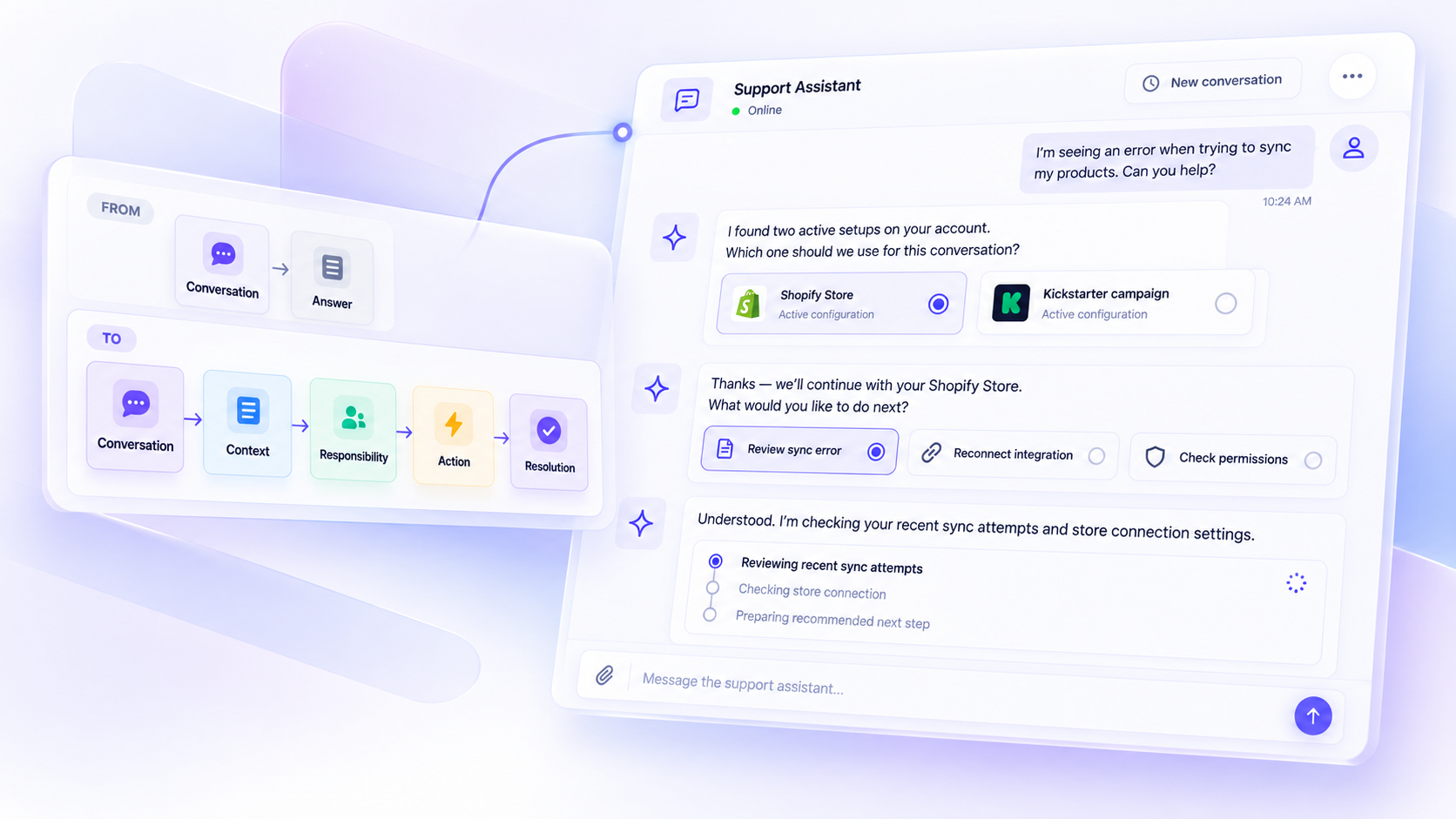
I map the workflow before choosing the implementation. Where should the system act autonomously? Where should it make a recommendation? Where does the user need visibility, confirmation or control?

AI can be the feature, actor, assistant or advisor. Choosing the wrong role creates unnecessary friction and risk.

03TEST THE PRODUCT VALUE

AI has to earn its complexity.

I evaluate the opportunity across user value, business value and feasibility.

Does it save meaningful time? Improve a decision? Unlock something that was previously difficult to build? Create differentiation or operational leverage?

If a deterministic system can solve the problem just as well, I would rather build the simpler system.

04DESIGN FOR UNCERTAINTY

Assume the system will sometimes be wrong.

AI products behave differently from traditional software. Outputs can be uncertain, inconsistent or incomplete.

I define what happens when confidence is low, where guardrails are needed, when a human should intervene and how users can understand or correct the system.

05EVALUATE BEFORE SCALING

Measure whether AI actually improves the product.

Before expanding an AI capability, I define what evidence would justify it.

That can include task success, quality, user acceptance, time saved, error rates, cost and latency alongside the product metric the capability is supposed to improve.

The question is not "Does the AI work?" It is "Does the product work better because of it?"

WHAT I WANT TO BUILD NEXT

I’m seeking a role where I can identify opportunities, define product direction, and collaborate with a team to turn promising concepts into products people use.

Turn an opportunity into a first product

Take an unmet need from an early hypothesis to a focused first release, with enough evidence to decide what deserves further investment.

Make complex workflows easier to navigate

Build products that help people move between tools, teams and decisions with less effort and clearer next steps.

Give people a reason to come back

Design onboarding that makes the product’s benefits clear from the first use, then improve the experience to support continued engagement and retention.